Soft bounce vs hard bounce: the core difference
A hard bounce is a permanent delivery failure. The address does not exist, the domain is invalid, or the receiving server has rejected mail in a way that is not expected to recover. A soft bounce is a temporary failure, often caused by a full inbox, temporary server issue, message size limit, or policy throttling.
The distinction matters because your follow-up action should be different. Treating every bounce the same creates either unnecessary list loss or unnecessary deliverability risk.
When to suppress immediately
Hard bounces should move straight into the suppression logic described in email suppression list best practices. They are a clean signal that the address should not be mailed again.
When to monitor instead of suppressing
Soft bounces deserve a retry policy. One temporary failure does not mean the address is bad. The safer rule is to retry over a small number of sends and suppress only if the same address keeps failing or later hard-bounces.
Common causes of each
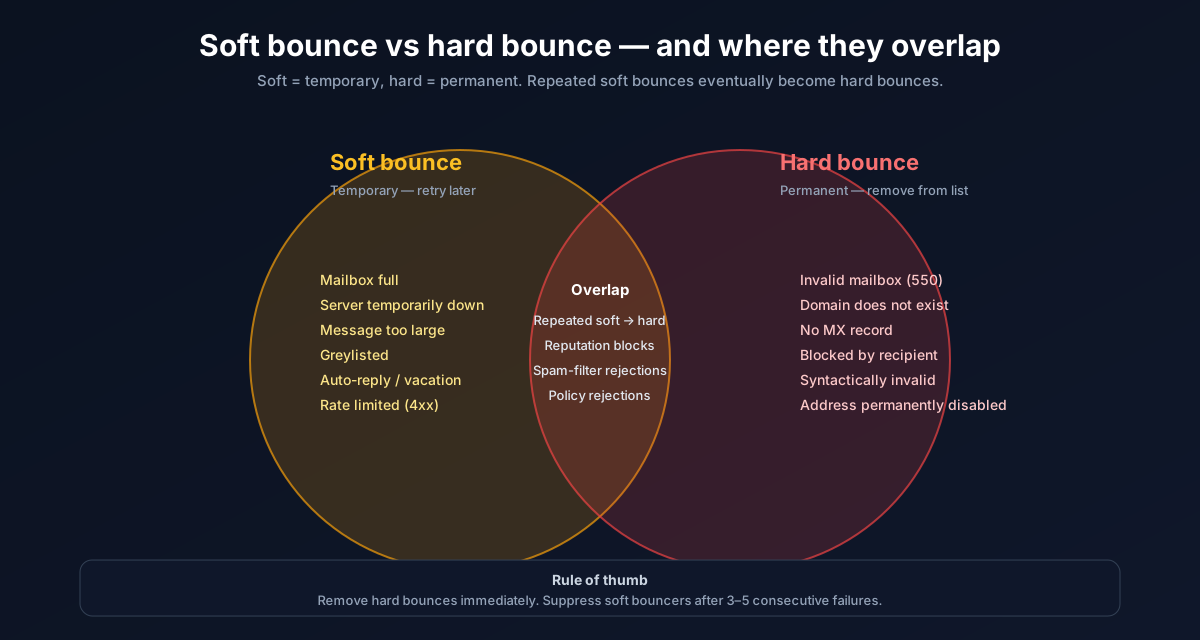
- Hard bounce: mailbox does not exist, domain is invalid, recipient system has permanently blocked the address
- Soft bounce: inbox full, server unavailable, message too large, temporary reputation throttling, greylisting
If you want benchmark ranges for acceptable levels, compare your numbers against email bounce rate benchmarks.
A practical bounce policy
- Suppress every clear hard bounce immediately.
- Retry soft bounces in line with your ESP defaults.
- Escalate repeated soft bounces for review if they persist across multiple sends.
- Investigate sudden spikes in soft bounces because they can signal infrastructure or reputation problems.
Key takeaways
- Hard bounces are permanent failures and should be suppressed immediately
- Soft bounces are temporary failures and usually deserve a limited retry window
- The wrong bounce policy either removes valid contacts too early or keeps mailing bad ones too long
- Repeated soft bounce spikes can point to infrastructure or reputation problems rather than bad addresses alone
- Before bounce issues spread, verify the next campaign segment with the free ListEmailCheck bulk verifier to reduce preventable failures.