Why use an email verification API?
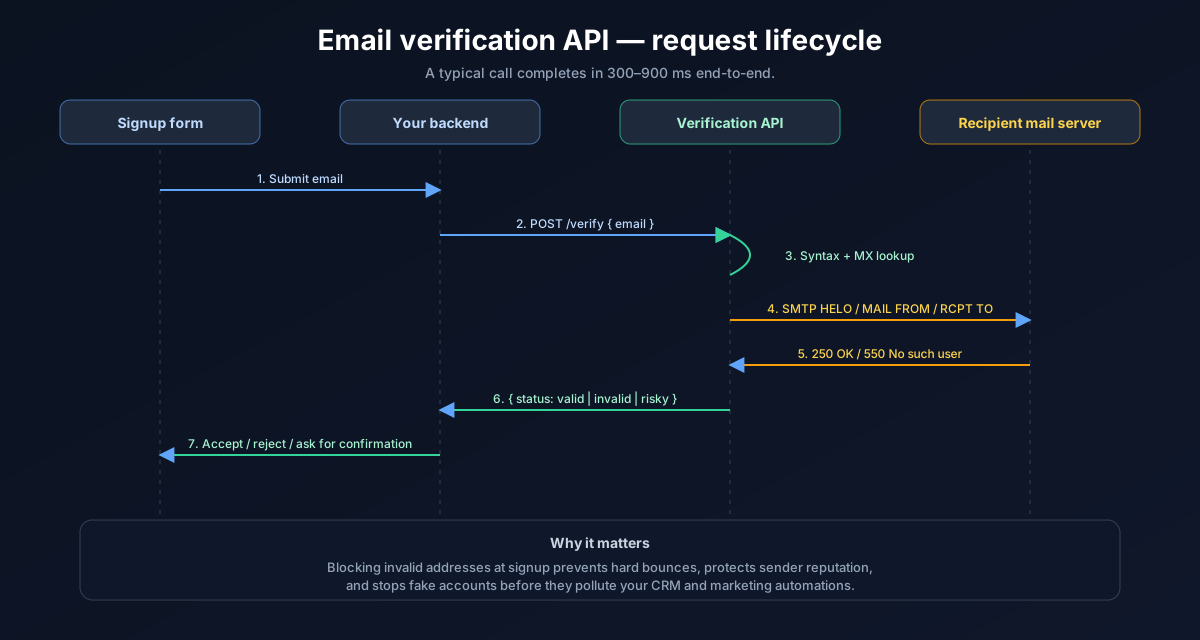
An email verification API lets you validate addresses before they enter your CRM, product database, or outbound workflow. Instead of discovering bad addresses weeks later through bounce reports, you catch them at signup, checkout, demo request, or import time.
That matters because downstream cleaning is reactive. Real-time verification is preventive.
What an email verification API should check
- Syntax validity so obviously malformed emails are blocked instantly
- Domain and MX record presence to confirm the destination can receive mail
- Mailbox existence signals where safe SMTP-level checks are available
- Disposable email detection for throwaway signups
- Catch-all and risk signals so you can decide whether to accept, flag, or route for review
If you are unfamiliar with the mailbox-checking layer, see how to check if an email address exists and what an MX record is for the technical foundation.
Where to use real-time verification
Signup forms
Block typo domains, disposable providers, and malformed addresses before the account is created. This is the fastest way to reduce fake free-trial signups and onboarding emails that never land.
Lead generation forms
Sales teams should not waste follow-up time on bad or role-based addresses. Verification lets you score or reject low-quality submissions before they hit the pipeline.
Bulk imports
Even if you already use a batch verifier, API-based checks can enforce quality at the moment records enter the system, which reduces cleanup work later.
How to implement it without hurting conversion
- Validate syntax instantly on the client side for fast feedback.
- Run server-side API verification before saving the record permanently.
- Use graded responses: accept valid, warn on risky, and block clearly invalid.
- Log the verification outcome so ops teams can audit form quality later.
In most products, the right UX is not to reject everything that looks imperfect. It is to reject obvious failures, warn on risky cases, and route edge cases intelligently.
API verification vs double opt-in
These solve different problems. API verification checks technical validity in real time. Double opt-in checks user intent and inbox access. The strongest setup uses both. If you need help deciding where confirmation still matters, read double opt-in vs single opt-in.
Key takeaways
- An email verification API stops bad addresses before they enter your systems
- The most useful checks include syntax, MX presence, mailbox signals, disposable detection, and risk scoring
- Real-time verification works best on signup forms, lead forms, and imports
- API verification and double opt-in complement each other rather than replacing each other
- If you want to implement this directly, start with the ListEmailCheck verification API and use the free validator to test sample addresses first.